Sunday, 6 May 2018

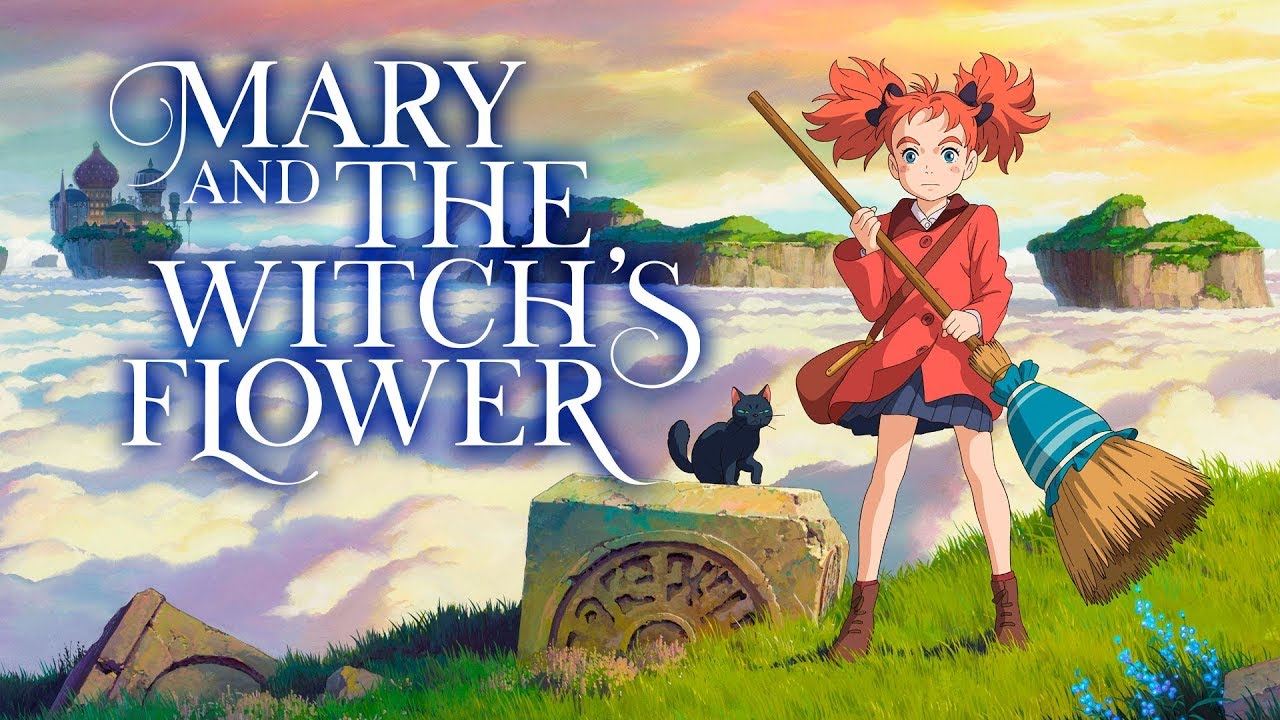
Mary and The Witch's Flower: A fantasy that rejects magic


I refuse to compare Mary and The Witch's Flower to the far superior Studio Ghibli productions  Spirited Away (2001) or Howl's Moving Castle (2004). This anime about a girl who becomes a witch and then uncovers a conspiracy of tremendous proportions, will be assessed entirely on its own merit.

The most frequent spell cast in this story is the "undo spell", sort of like a 'ctrl Z' of incantations. Director Hiromasa Yonebayashi accomplishes in creating an utterly spellbinding magical world akin to Harry Potter or The Chronicles of Narnia, and then promptly hits the undo button. Countless story possibilities are wasted. (Perhaps the source material is to blame, a 1971 British children's book The Little Broomstick by Mary Stewart.)

Mary (Ruby Barnhill), an excitable yet accident-prone girl has been getting bored out-of-her-mind, having to stay at her nan's home in the countryside, she feels isolated. Barnhill is fiesty, using all the appropriate acting chops to make the character distinctive - she chews the animated scenery with teenage angst. This approach actually fits the tone and makes the clunky dialogue easier to forgive.

In a suitably gothic fashion, a pair of cats lead her to an exotic and mysterious flower - known as the Witch's Flower. Events lead her to smush the plant all over herself and the broomstick that she has found, it shakes rather suggestively and then unceremoniously hurtles her through the sky in an unruly manner. She is dashed through the clouds to where a school for magic is located.  Studio Ponoc's animation is riveting - there is a rich and majestic aesthetic quality to the visuals.
Mary (Ruby Barnhill)

Headmistress Madame Mumblechook (Kate Winslet) takes us and our plucky protagonist on a guided tour. Leading us through the various supernatural seminars - this snappy sequence feels like an intoxicating joyride through animation, unlocking an innate childish sense of wonder. Winslet's performance is authoritative, exuding warmth and haughtiness in bucket loads with masterful inflection.

Unlike J.K Rowling's world, the magic of Endor College is anchored in science. "Electricity is a type of magic" comments Mumblechook, as she passes the glass elevators, to her prospective student. We are then shown chemistry classes. Students work tirelessly to be at the peak of intellectual and physical fitness - yeesh magic isn't all fun and games! Apparently it requires a lot of study, suddenly Mary isn't quite as enthusiastic - it's all so overwhelming for her.
Mary (Ruby Barnhill) & Madame Mumblechook (Kate Winslet)

The stand out performance comes from Jim Broadbent. He voices Doctor Dee, a small peevish and mad scientist - half his scalp seems to be composed of electrical components. Broadbent amusingly babbles in fiery fervent tones. His meeting with Mary is particularly entertaining, he quizzes her on a chemical equation and she guesses an answer that sends him in to a dizzying spell of hyper mumbo-science-magic-jumbo and concludes that she is a prodigy.

So far so good, if a little overwhelming. Nevertheless, it's all seems too good to be true. Mumblechook and Doctor Dee have been experimenting on animals. They're up to their elbows in sinister business. The whole supernatural set up is dripping with mystery.
Doctor Dee (Jim Broadbent)

The issues arise in the dialogue and the story. If this movie were live action, I suspect that it would be lambasted for its archaic characters and simplified plot. It's cheesy but it fits within the form and style of Japanese anime.

The story has ambition, nevertheless it is limited by the confines of its running time. Once the world has been set up, rather than staying in this magical realm - the plot kicks in to action, occurrences unfold leading us to the climax which is wrapped up rather neatly. Just as the drama is becoming captivating, the characters are saved easily and all the evil doing undone with an "undoing spell" - all that suspense ruined.

The key lesson to be learned is that there is a magic in reality and that we need to be content and happy with the natural world. Magic is rejected as an evil elevation of science. Similarly, in Spirited Away (2001)  and Hiro Miyazaki's other works there is a trepidatious attitude towards magic - which may signify an attitude towards magic inherent in Japanese anime.

I couldn't help feeling disappointed by Mary's choice to cast aside magic for a normal life. The very conceit of fantasy is fuelled by a curiosity of the unknown and an esapist desire to explore it.

Mary and The Witch's Flower has its merits and is a cinematic feast, but it misses the mark - peaking too early and falling over its own laurels.

Wednesday, 2 May 2018

10 gripes the critics had with Avengers: Infinity War


WARNING: The below findings may cause Marvel fans' blood to boil.


As expected, Avengers: Infinity War has been a commercial and critical juggernaut. Tying together the Marvel Cinematic Universe (MCU), it has had the biggest opening weekend of all time with a $258.2 million domestic intake and $640.9M global intake. The reviews have also been strong, review aggregator site Rotten Tomatoes (RT) published a 84% "certified fresh" score on their tomato-meter and a 96% audience approval score .


So my question was, who are the 16% of critics that didn't like the film and what were their issues with it? 

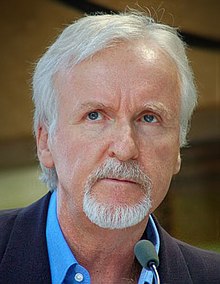
James Cameron
This question sprung from comments made by Titanic (1997) and Avatar (2009) director James Cameron, where he told Indiewire (prior to the release of Infinity War) that he hoped for a "Avengers fatigue". Evidently this hasn't happened yet, but Cameron's attitude clearly demonstrates a Superhero nausea that a small percentile must share.


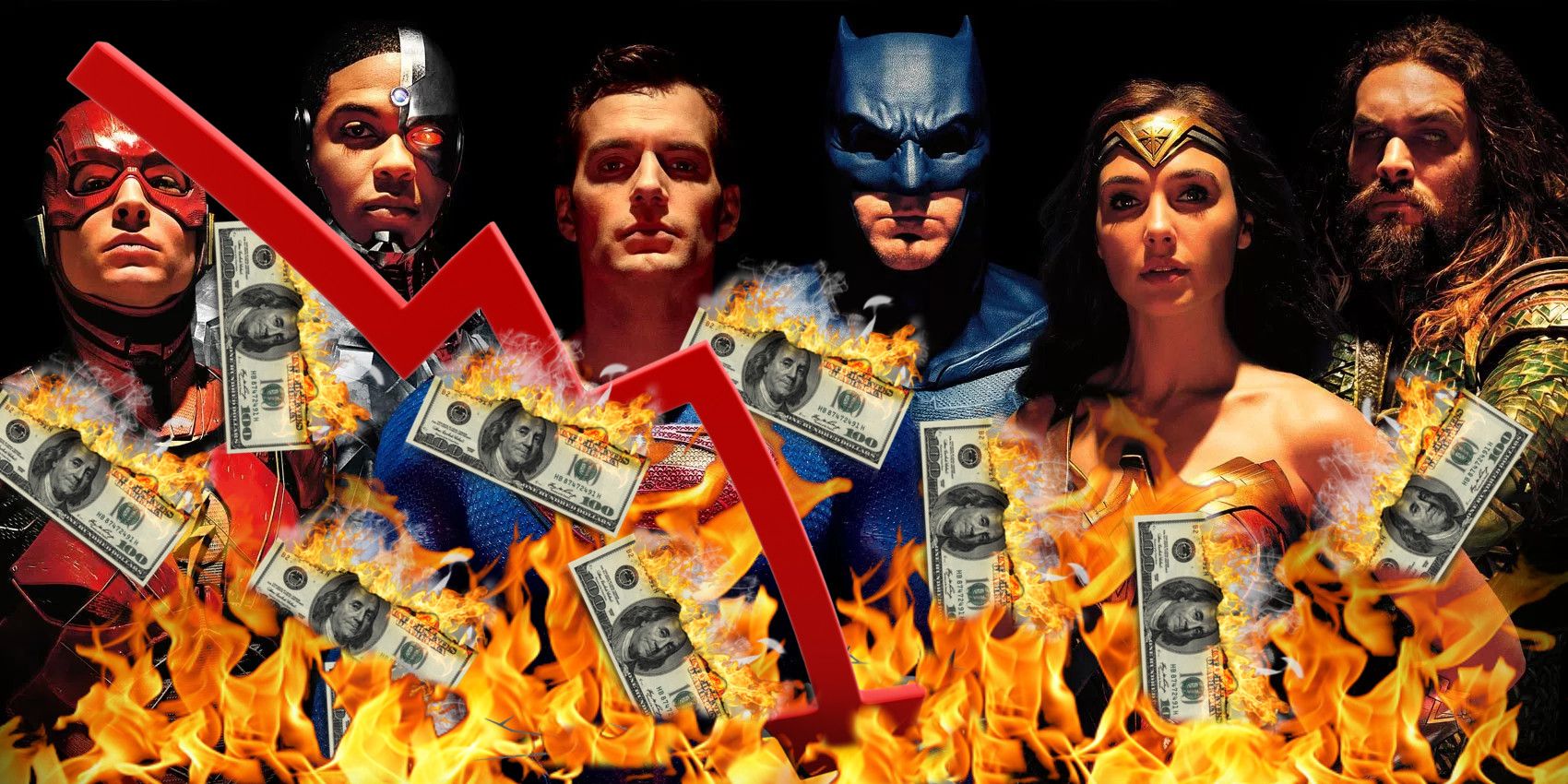
RT is a powerful site, that has the proven ability to turn a potential blockbuster in to a flop-buster. The Justice League (2017) release was arguably crippled by the low RT score, coming in at a pathetic 40% - making an embarrassing return of $657.9 million for its overall run (which has already been usurped by Infinity War, barely a week post release).
Justice League (2017): A critical and commercial failure

Likewise, the audience reviews for Star Wars: The Last Jedi (2017) were at a stinkingly low 47%, it proved to be a divisive movie. The Last Jedi's overall intake of $1.321 billion may seem like a hefty figure, but Star Wars: The Force Awakens (2015) made $2.066, that comes at almost a loss of $1 billion - well below Disney's predictions for their supposed killer whale of a franchise.
Star Wars: The Last Jedi - a divisive movie


Before I reveal why 16% of the critics didn't like Infinity War, below are some choice snippets that outline how RT’s certified “top critics" thought the superhero blockbuster succeeded.

The plotting and impact of emotional arcs have been praised:


In addition, thrills and exhilarating action have received admiration:


The climactic nature of the film, serving as the penultimate finale to the MCU franchise as a whole also received plaudits:


From the selection of top critics, whose reviews derided the Infinity War to the point of deeming the superhero spectacle a rotten tomato, I have used their quibbles as a representative of the 16% of "haters" this film has garnered and disseminated them in to 10 key areas.


Here's a warning fellow MCU fans, this type of criticism is not for the faint hearted...keep the pitchforks at bay and put down any sharp objects.


1. Too Many Characters

A "surfeit" of "celebrity cameos"

Anthony Lane of The New Yorker, began his review by deriding the movie by listing all of the major players (which was admittedly a hefty paragraph):
Iron Man (Robert Downey, Jr.), Spider-Man (Tom Holland), Black Panther (Chadwick Boseman), Black Widow (Scarlett Johansson), Captain America (Chris Evans), Doctor Strange (Benedict Cumberbatch), Falcon (Anthony Mackie), Hulk (Mark Ruffalo), Thor (Chris Hemsworth), Gamora (Zoe Saldana), Nebula (Karen Gillan), Peter Quill (Chris Pratt), Drax (Dave Bautista), Loki (Tom Hiddleston), Wanda the Scarlet Witch (Elizabeth Olsen), and her even redder boyfriend, Vision (Paul Bettany).
 He then clarified that "Rosencrantz, Guildenstern, Dorothy, Scarecrow, Rin Tin Tin, and Shaggy from “Scooby-Doo" had not made an appearance. The suggestion here being that amount of whacky players and side players teaming up became "quantity over quality" (A.A. Dowd, AV Club).

Dowd went on to allude with a rather graphic and rather striking metaphor that the film was "so choked with characters that it can barely breathe", sympathising with Thanos' aim to wipe out half the population.

Furthermore, Michael Phillips (writing for the Chicago Tribune) reckoned that "smushing" the various Marvel rosters together was more like a "marketing convergence seminar" than a movie. I can't imagine he had the most thrilling experience - Richard Brody from The New Yorker  could probably relate, who felt the storyline was "absurdly extended" to accommodate slots for the multiple stars to fill which he likened to a series of mere "celebrity cameos".

 Moreover, Mick Laselle (San Francisco Chronicle) made a comparison with the DCEU's Justice League:
It’s funny how the Justice League, DC Comics’ answer to the Avengers, has a completely different problem: Batman is powerless, and Superman is boring. And no one cares about anybody but Wonder Woman, so why give screen time to a succession of second stringers? “Avengers: Infinity War,” by contrast, dies of surfeit, not from lack, but it dies all the same.

2. Key Characters Sidelined


Black Panther, Captain America, Black Widow and Bucky

Dowd laments that the "most appealing" characters are marginalised, claiming that Captain America, Black Widow and Black Panther barely speak "half a dozen lines" each. This sentiment is echoed in La Salle's thoughts, who bemoans that the most "the colorful personalities — gets short shrift", adding that Black Panther hasn't a single important moment even though the final battle is fought in his kingdom.  Philips also agrees, claiming that so many characters "must content themselves with pinballing around the margins."

3. Derivative Plot


Thanos: The Infinity Gems

The heroes have to stop bad lad Thanos from collecting a series of infinity gems that when brought together and activated will wipe out half the population of the universe.

Brody scolds screenwriters Christopher Markus and Stephen McFeely for creating a "straightforward and classic MacGuffin" with the gems. A "Macguffin" is derogatory term that describes an object or character in film that merely serves to generate the plot, it is otherwise inconsequential. Dowd mocks the use of the gems as being "scattered across the known cosmos, like the Horcruxes of Harry Potter".


Lane goes even further, claiming the plot has been "pilfered from The Lord of The Rings" series, one can imagine that he is drawing similarities from Thanos' search for the infinity gems to Sauron's search for the titular ring.

4. Repetitive and Unimaginative Storytelling


Spider-Man, Tony Stark, Drax, Peter Quill and Mantis.
Stephanie Zacharek writing for Time Magazine decries that:                         
There’s no pacing in Avengers: Infinity War. It’s all sensation and no pulse. Everything is big, all of the time. Tucked amid the story’s numerous operatic sacrifices—barely a moment goes by when a character doesn’t almost die, or actually die, or temporarily die.
She then triumphantly concludes:
And so the movie treats audience expectations like a set of ice-cube trays to be filled, and in the end, you have to admit it’s very thorough. That’s not the nicest thing you can say about it; it’s the most damning. 
A-ha! A damning quip pulled out of the bag at the very last moment, like the severed head of a displeased bunny. Zacharek's ice-cube tray simile alludes to the oft accusation that the Marvel films follow a generic superhero structure, ticking off heroic plot points as the story advances.

The New Yorker's Lane is merciless in his derision, in his opinion the film is not even a movie but a series of "broken images", following the stunted pattern of "a fiery slugfest, a pause for bonding, a quick weep, and a patch of jokey repartee, before the slugging returns."

Phillip's amps up the condemnation even further simplifying the plot as "a 160-minute game of rock, rock, rock, rock, rock, rock, scissors, paper. "

5. Thanos

A cluster of these reviewers thought Thanos' mere appearance was ridiculous.
Thanos: a "silly" character

Here are the top three Thanos burns:
  1. Giant dude with a pronounced, corrugated chin, like the cow catcher on an old railway engine (Zacharek – Time Magazine).
  2. Thanos, the bulky space dictator with the head like a craggy eggplant (A.A. Dowd - AV Club).
  3. Thanos (Josh Brolin), endowed with a leathery face and a bulbous, striated chin (Brody – The New Yorker).

Dowd elaborated that Thanos was a "silly" character, particularly in comparison to Killmonger "truly tragic, company-best villain" played by Michael B Jordan in Black Panther (2018).
  
Conversely, John Semley (The Globe and Mail) thought Thanos was a boring villain:

His aim is “balance.” He is, in his word, “dispassionate.” His madness is utterly, boringly conventional.

It must be noted that Semley didn't seem to like any of the Marvel movies, he even went as far to award Infinity War  a measly 1.5 stars.

Marvel fans - calm your passions - we're now halfway through, we're over the hump...

6. Bad Writing

Screenwriters Stephen McFeely and Christopher Markus

Marvel fans, seriously, cool it!

Grit your teeth. Picture a beautiful savannah on a hot summers day. Do whatever you have to do to keep the blood pressure down.

Our pal Semley thinks that the "plotting is bogged down by fetch quests and sundry deus ex machinations. The jokes are flat and, given the severity of the film’s premise, weirdly tone deaf."
Current Mood.

Breath!


Inhale.

Exhale.

Brody writes that "None of the dramatic threads has any psychological impact."

Brody is clearly a monster who has no care for a crying Peter Parker. There, I said what all of us Marvel comrades were thinking.
Peter Parker and Tony Stark

Phillips is more measured in his response to the writing, even though the tone has clearly disturbed him somewhat:
The better Marvel movies have found ways to interlace wisecracks with obligatory, semi-infinite warmongering…But smack up against the rough stuff in “Infinity War,” the scenes of mass genocide and close-ups of anguished, recently stabbed major players, the mood swings are a little bit psycho.

7. Bad CGI Fight Scenes

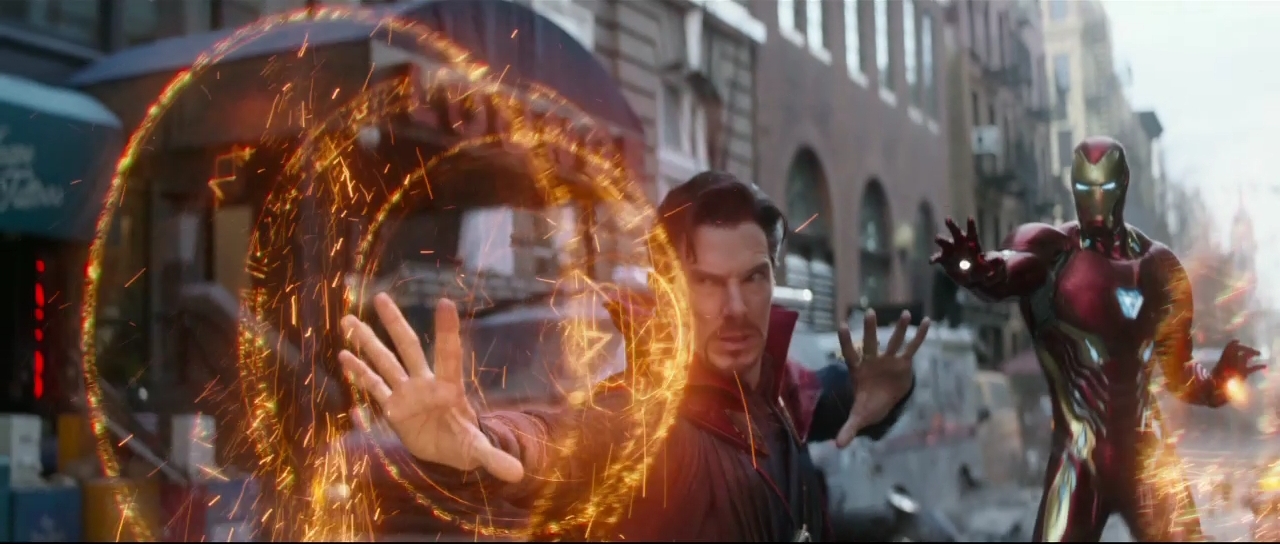
Doctor Strange & Iron Man

Dowd fondly remembers the hand-to-hand combat action sequences in the Russo brother's previous outing Captain America: Civil War (2016) and he feels that with A:IW "we get a lot of CGI figures darting across the screen, tossing multicolored bursts of energy at each other. It’s numbing, mostly."

A.O Scott from The New York Times enjoyed the CGI action sequences even less:
The action is especially tedious and predictable. I mean both the scenes of fighting and flying and the overall rhythm of the first two hours or so. People talk for a while, sprinkling jokes and morsels of personality into the heavy dough of exposition. Then they fight in the usual way, by throwing giant objects (and one another) and shooting waves of color from their hands. The noisy, bloated spectacles of combat were surely the most expensive parts of the movie, but the money seems less like an imaginative tool than a substitute for genuine imagination.
Pre-CGI Ebony Maw/Squidward attacking Doctor Strange


8. Bad Cinematography

Steve Rogers leading the battle of Wakanda

Phillips hated the action sequences for an entirely different reason, claiming the Russos:

shoot the frenzied battle scenes every which way, hand-held camera one second, impersonally smooth the next. Any given moment is dominated by the usual blinding streams of pricey digital Death Light.
Seems like the Chicago Tribune are screaming out for 70mm film, so that the grain of footage during a Hulk sucker-punch has that nostalgic quality, serving as a call-back to the Frank Capra era.

9. The Score

Alan Silvestri, composer of Avengers: Infinity War (and "arena-Wagner" - Richard Brody)

Lane conceded that the film was an "all-star  spectacle" - but it's "like listening to two and a half hours of Tin Machine."

La Salle isn't has a theory, he believes the Russo brothers use:
Alan Silvestri’s score announce when something is important. If the horns are loud, it’s big. If the horns are louder, it’s bigger. If the horns are practically screaming, then it’s enormous. But is it? These are the horns that cried wolf.
The film clearly wasn't bracing enough for La Salle, he's made of harder - it takes a hell of lot more to please him.

 I feel as if I need some horns to announce this next assertion made by The New Yorker's Brody. Brody doesn't hold back, comparing Silvestri's score to a Nazi marching band:
 Thanos’s plot is explicitly, enthusiastically genocidal (of his own murderous efforts to make “trillions cease to exist,” he offers the Nazi-like assertion that “The hardest choices require the strongest wills”), and the movie resounds and rumbles throughout with a megalomaniacal energy that plays like arena-Wagner…Alan Silvestri’s score is entirely, blaringly functional if not memorable—but, with its symphony-orchestra battalion of winds, strings, and kettledrums, it’s in the wrong genre altogether. What the movie calls out for, what it suggests from the start, is the electrified fury of throwback heavy-metal—hair-metal. That the overlords of production didn’t see fit to commission that kind of music suggests, dismayingly, that they possessed no desire to distract from the thudding and thrashing that the Russos depict onscreen.

 "Throwback heavy-metal—hair-metal", a specific request for a bit of a bop and a boogie to distract from the harsh hyper-realities the soldiers of Wakanda were facing at the film's most climactic moments.

10. That Ending

Thanos: The climactic scene

Phillips was suitably perplexed and suspicious of Marvel's creative choice to wipe out half the heroes, deeming it "as simply a thing designed to frustrate audiences into easing their frustration a year from now, by seeing the next “Avengers” movie." The purpose of a long-running series has evidently escaped this tortured reviewer, after 19 movies he thought he could be done with it...but they've dragged him back in!

Lane admits that the disintegration of half our heroes is "a sad sight, but sadder still is my premonition: they’ll be back."

However, (to use an idiom) often getting there is half the fun. Brody doesn't think so, he claims that the multiple deaths:
feel cheap, because the powers of superheroism—amped up by the reversibility of time thanks to the time stone—make no result seem conclusive, no death seem final. The redemptive heroics that are doubtless forthcoming in the next episode are little to look forward to; they have the inevitability of the calendar.
 Semley also latched on to how predictably reversible he found the ending, describing the "superhero death" as the "long-standing meme of the genre". Semley really doesn't like superhero movies - but he does have a point - the stakes are low- in Christ like manner, it is suspected that dead supers are generally going to come back.
  
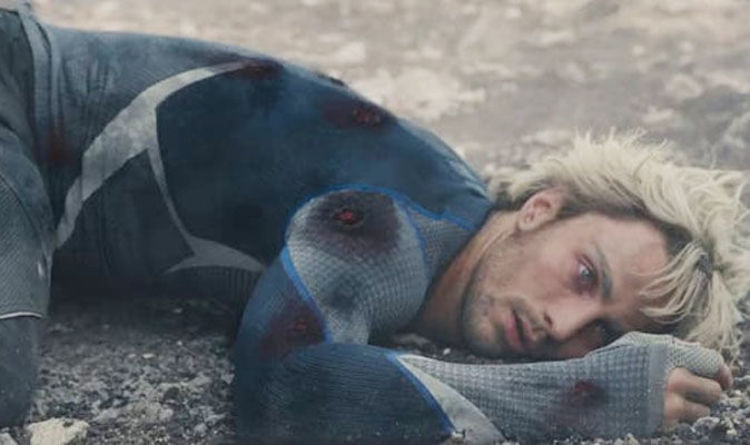
Nevertheless, so far the DCEU in the Superhero movie spectrum is the only guilty party to this trope - with the second coming of Superman in Justice League. Quicksilver was the only Superhero death prior to Infinity War - and I don't see him saving the day ever again. 
Quicksilver: Dead
There it is. That eye still twitching?

The mystifying reasons for the 16%'s disgruntlement have been answered. What a thankless task. I hope you appreciate my efforts. Share your thoughts in the comments.